The Buffalo Hero of World War I
It is a sad fact that many worthy people who commit many noble and worthy deeds become forgotten to history. Within a few generations, few remain that share their stories and speak their names. Private Wayne Miner certainly deserves credit and recognition for his courage. It’s admirable and important when plays like The Buffalo Hero of World War I, returning for another presentation at the American Theatre of Actors, strive to elevate these stories.
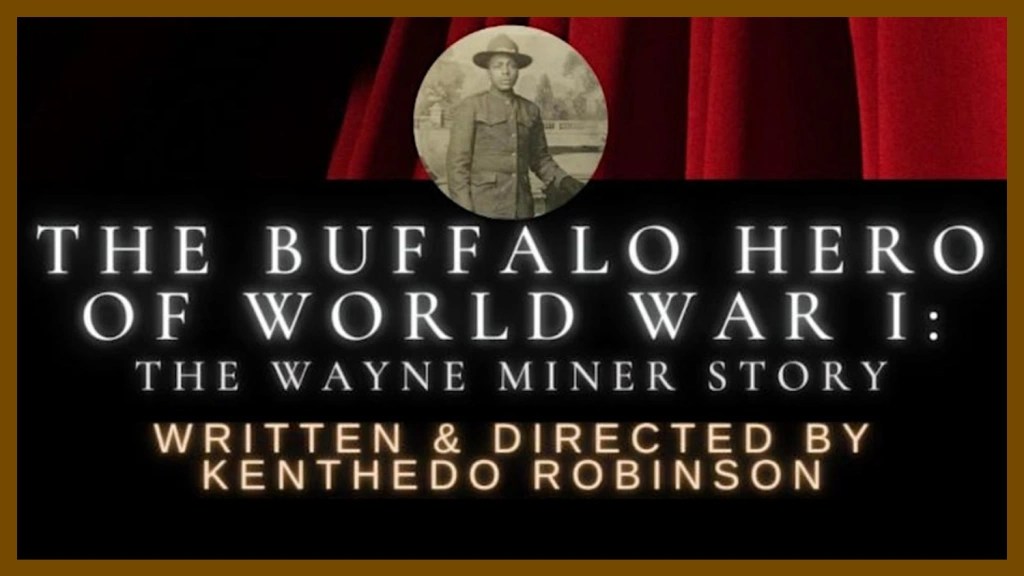
Playwright and director Kenthedo Robinson has put a lot of time, care, and research into his treatment of the story of Pvt. Miner, a Buffalo Soldier of the 92nd Division who served in France in WWI, and who ultimately was killed in action a few short hours before an armistice was signed when he volunteered for a mission running out to the front line he and other black soldiers were never properly trained or equipped to face by white superior officers. Robinson is careful to honor the courage of these men. The first act focuses on their time on base in the States, and the horrible treatment and lack of care they receive. The second act details the division’s service in France towards the end of the war.
The show’s first act is the stronger. It is powerful to see the differing reactions of Pvt. Miner and his fellow soldiers to the wid spread systemic racism and hatred they face on base. The uniforms, training, and other supplies they need routinely denied and facing constant humiliation and denigrating remarks from white officers, the black soldiers present different arguments and ideas about what an individual can and should do when caught up as a victim in such a system. How and when do you speak up? What is the best way to effect real change? At what point is change happening slowly and incrementally not enough when pushing back too hard can carry real danger? There are some incredibly powerful scenes showing the company’s struggles, in the present and talking about their struggles in the past.
There are some weaker points to the writing – occasionally the pacing lags (though sometimes this was a production issue with things like scene changes taking what felt like a long time), and some scenes feel occasionally repetitive of earlier conversations. The second act feels like it has less clarity and there feels like there’s relatively little wind down after Miner’s sacrifice to end the show. Occasionally it feels a little heavy handed with some of its points. But it does a great job highlighting one key aspect of Miner’s personality – he put emphasis on deeds not words. The script has people talking up Miner a lot, but Miner himself just finds ways to show his support to his fellow soldiers. Show his values.
The staging and casting were well handled, and the cast as a whole was excellent, but a few performances particularly stand out. Alton Ray as Pvt. Wayne Miner is a grounded, rooted performance to anchor the show. He does a great job in the role and serves as a sort of level spot among the others. Nicholas Dodge as Cpt. Quincy Blu, the horrifically racist white captain over the Buffalo Soldiers, is intense and often terrifying, frequently filling the stage with loud militant energy. Rommell Sermons as Lt. Clark, the black officer directly commanding Miner’s division, also is a strong presence often in contrast to Dodge’s Cpt. Blu, solid but rarely manic or harried and with the air of someone who has put up with more than enough in their time and carrying himself in a way that shows he has earned the respect and recognition he has.
The ATA has put on a good production of a solid script that hopefully can get some further recognition. So much of the show is powerful and moving, and stories like these deserve to not be forgotten. Even just over one hundred years in the past, there is relevance in these stories. There is meaning to these lives. And the struggles of the past should never be fought in vain. There is a reason the team has stood so firmly behind this show, and hopefully that can show clearly to everyone who sees the show or reads the script.
 OUTER-STAGE