NEW YORK — “It’s more complicated than that.” Sherman Singleton, a character in “Briar
Patch,” delivers the show’s defining line. The new play by Will Carter premiered as a staged
reading directed by Thomas M. Copeland at the Midtown International Theatre Festival in
Manhattan on July 23.
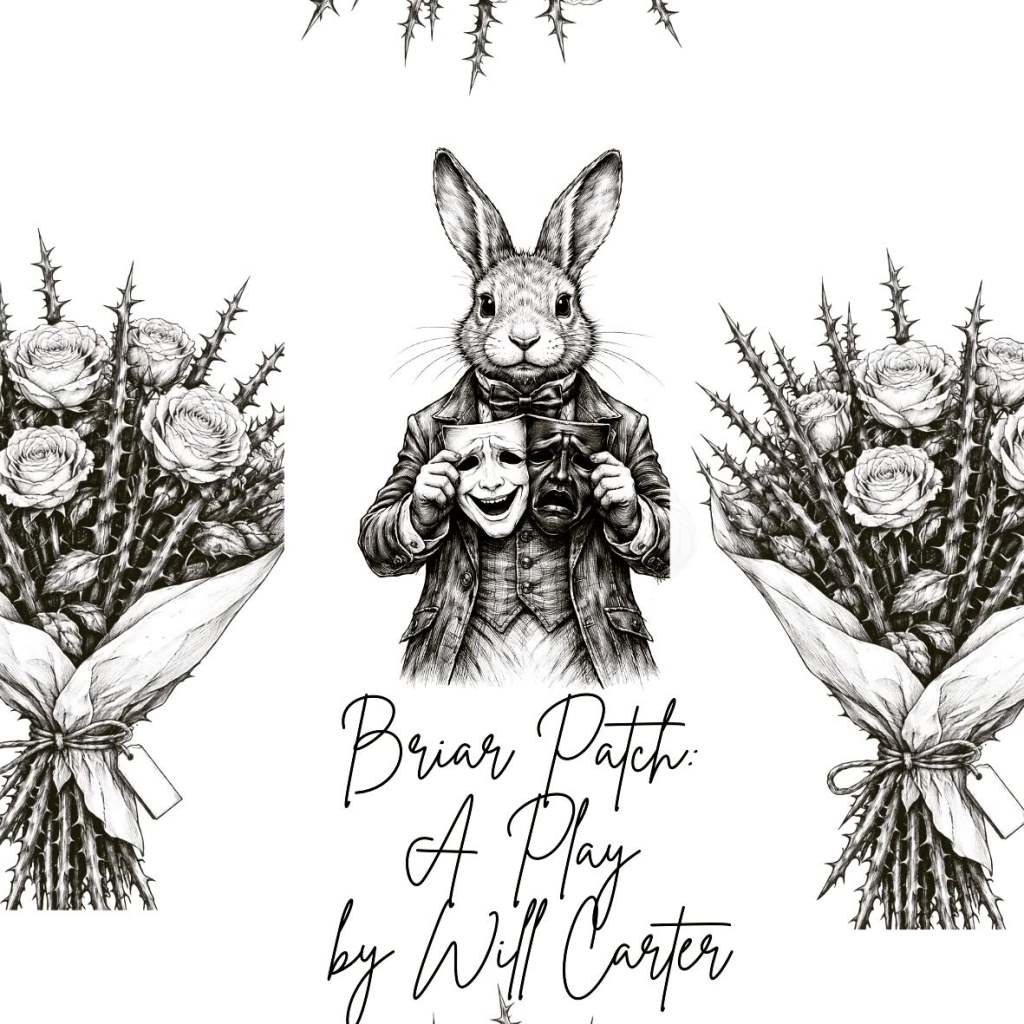
The complexities of fair judgment demand context. This is the core theme of the comedic drama.
Carter uses the lens of racism and places the stories of Joel Chandler Harris in present-day south
Georgia to unpack crucial issues related to judgment, contemplation, and understanding. The
events unfold in Eatonton, Georgia, surrounding play about Harris, the town’s most famous
citizen and author of the “Uncle Remus” and “Br’er Rabbit” stories.
Integrated into the show as a play within a play, these tales serve as a metaphor for the story of
Malcolm Singleton, a Black high-school senior; his mother Jeanine; and his grandfather
Sherman. Malcolm is arrested after a fight with two white football teammates, jeopardizing his
place on the team and what he sees as his only path to college. His mother, Jeanine, fears the
consequences, particularly after her husband’s own mistreatment by the justice system.
John Holiday, a local minister and longtime friend of Sherman, proposes that Malcolm
participate in a church benefit performance of the “Br’er Rabbit” stories, believing it could
influence the judge overseeing his case. Malcolm and Jeanine initially object to the material
seeing it as racist, but the complicated history of Harris introduces the play’s larger question of
whether people and events can be judged fairly without context.
Their plan backfires when publicity surrounding Malcolm makes his case politically sensitive,
and the judge decides he wants a trial. “You’re a Black teenager in south Georgia … It’s an
election year,” Jeanine laments. The story culminates in the church performance, in which
Jeanine, knowing the judge is in the audience, delivers an appeal for judgment grounded in
context.
Carter’s dialogue mixes gravity, realism, and authentic southern wit to present the show’s
interconnected plotlines in a way that charms the audience and leads them effortlessly to deeper
contemplation of the play’s core theme. John Holiday’s remark, “You wouldn’t know a sermon
from a stick in the mud,” garners chuckles from an audience who is later presented with, “It’s
just a bit more complicated than stereotypes.”
The characters John Holiday and Jeanine Singleton stand out as the clear anchors of the
performance. John is portrayed with a commanding presence. He is sometimes bumbling, usually
naïve to his own inherent racism, and powerful in his own small bubble. Yayela Antoine is
clearly devoted to the character of Jeanine Singleton. Full of sass, snark, and sincerity, Antoine is
deeply invested in every vocal inflection, facial expression, and movement. A credit to both her
and Copeland.
Nick Smith gives a notable performance as Buddy Holiday, John’s son. At least a decade
younger than his character, Smith establishes the maturity of the technical college professor who
aspires to pursue a PhD. He owns his character. The age gaps (Smith and his character, Buddy
and Jeanine as former high school classmates) work in a staged reading. A full production would
demand more age-appropriate casting.
Justin Diaz comes to life as the rabbit in the play within the play more than as off-stage Malcolm
Singleton. His comedic timing and playfulness as Malcolm playing the rabbit are a high point in
the show.
As Sherman Singleton, Rodrikus Springfield struggles with reading, delivery, and presence.
Antoine compensates through the father-daughter dynamic, minimizing the impact of
Springfield’s on-stage challenges. Copeland’s direction is subtle. A little bit of blocking added a
needed dimension to the reading, presenting the show’s ideas beyond the written words.
While it’s rare to consider the quality of a narrator outside maybe “Out Town,” “Into the
Woods,” or “Joseph and the Amazing Technicolor Dreamcoat,” a staged reading relies heavily on
this role. Heather Burgess does a fine job of unintrusively maintaining cohesion and providing
logistical context.
The “Briar Patch” script does what good art is supposed to do: Make a statement. The staged
reading began the process of bringing that statement and related questions to life. This play
drives home the dire need for context when judging actions and words, the present-day horrors of
racism, and the value of education. It deserves a louder voice through a fully mounted
production, briars and all.

