“People don’t do such things!”
But, alas, they do, as clearly illustrated in Modern Classic Theatre’s current production of Henrik Ibsen’s dramatic play Hedda Gabler, running through May 31. Kicking off the last decade of Ibsen’s influential career, the critic Joseph Wood Krutch cites the title character as “one of the first neurotic female protagonists of literature,” pre-dating Freud’s first work on psychoanalysis. The role of Hedda is arguably one of the most challenging in the history of theater, which Elle Lucksted deftly navigates here. Her immersion in this character never wavers, with an expressiveness that is truly arresting.
As with many in others in Ibsen’s canon, this play is deeply expository; in fact, initially, his works were much more widely read than performed. John Emro’s direction maintains the brisk pace essential to counterbalancing its weighty narrative, and Jeanine Loesch’s costumes provide a varied palette for keeping things interesting visually. It may have been better for the set to have taken up less of BACCA’s expansive width – not a strength of this space – which would have created more of an immediacy for the audience and concentrated the staging, while also adding a claustrophobic feel to help heighten the stakes for Hedda.
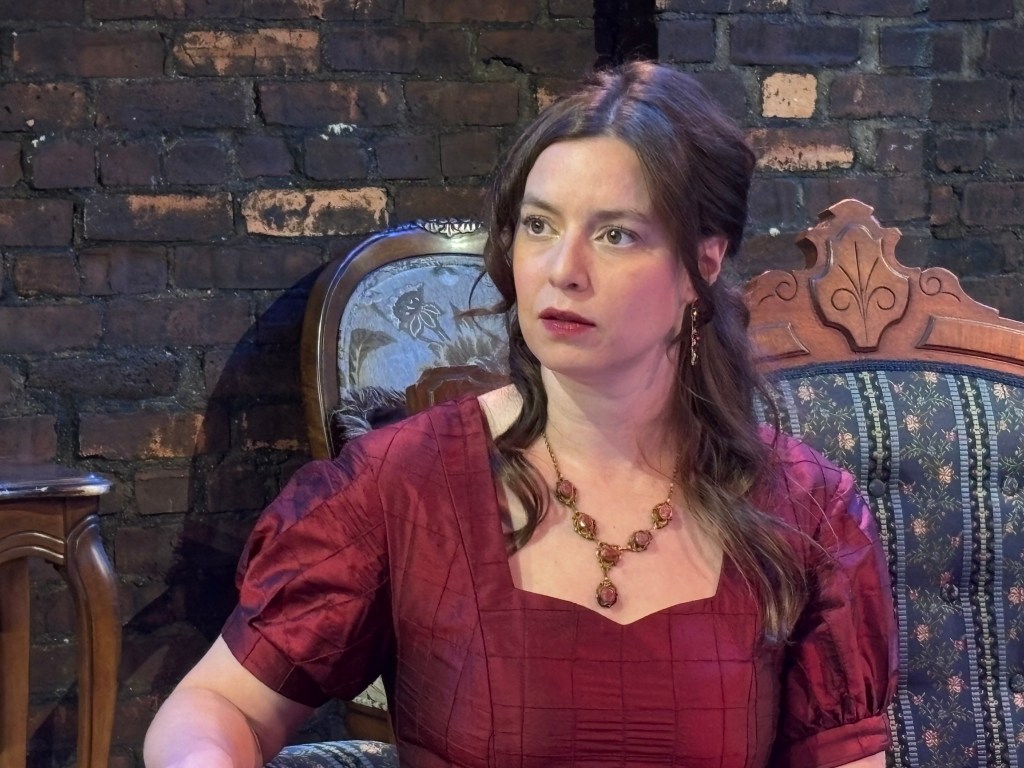



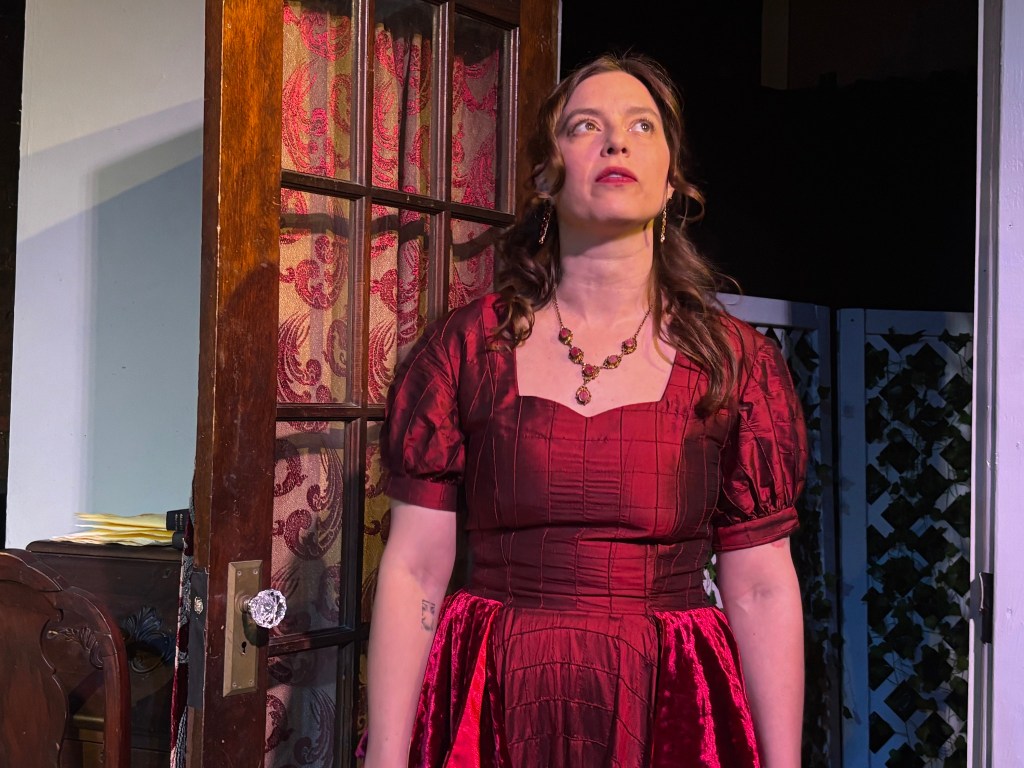
As Hedda’s pre-occupied husband George Tesman, Paul DeFilippo brought out all the character’s humor, helping to offset the play’s angst. Candace Wilkerson’s Aunt Julia provided a worthy foil for Hedda, representing the societal pressures that are eating away at the latter. Joseph Cavagnet offered a foreboding presence as the ever-lurking Judge Brack, which could have been mined even further. Renatto Cornejo’s Eilert Lovborg effectively contrasted George’s blandness, his presence supporting Hedda’s conflicted motivations regarding him. Erica Jeudy as the housekeeper Berte hit all the right notes. Alexa Roosevelt expertly portrayed the oft-tortured Thea Elvsted, delivering a multi-layered performance from beginning to end.
Because of the many challenges it presents, Hedda Gabler is seldom produced, which is why it aligns so perfectly with MCT’s mission to address such oversights, making sure today’s audiences can also enjoy one of the world’s first “modern” dramas. As George would say, taking advantage of that rare opportunity now could lead to enjoying an “extraordinary” experience in the theater.

